

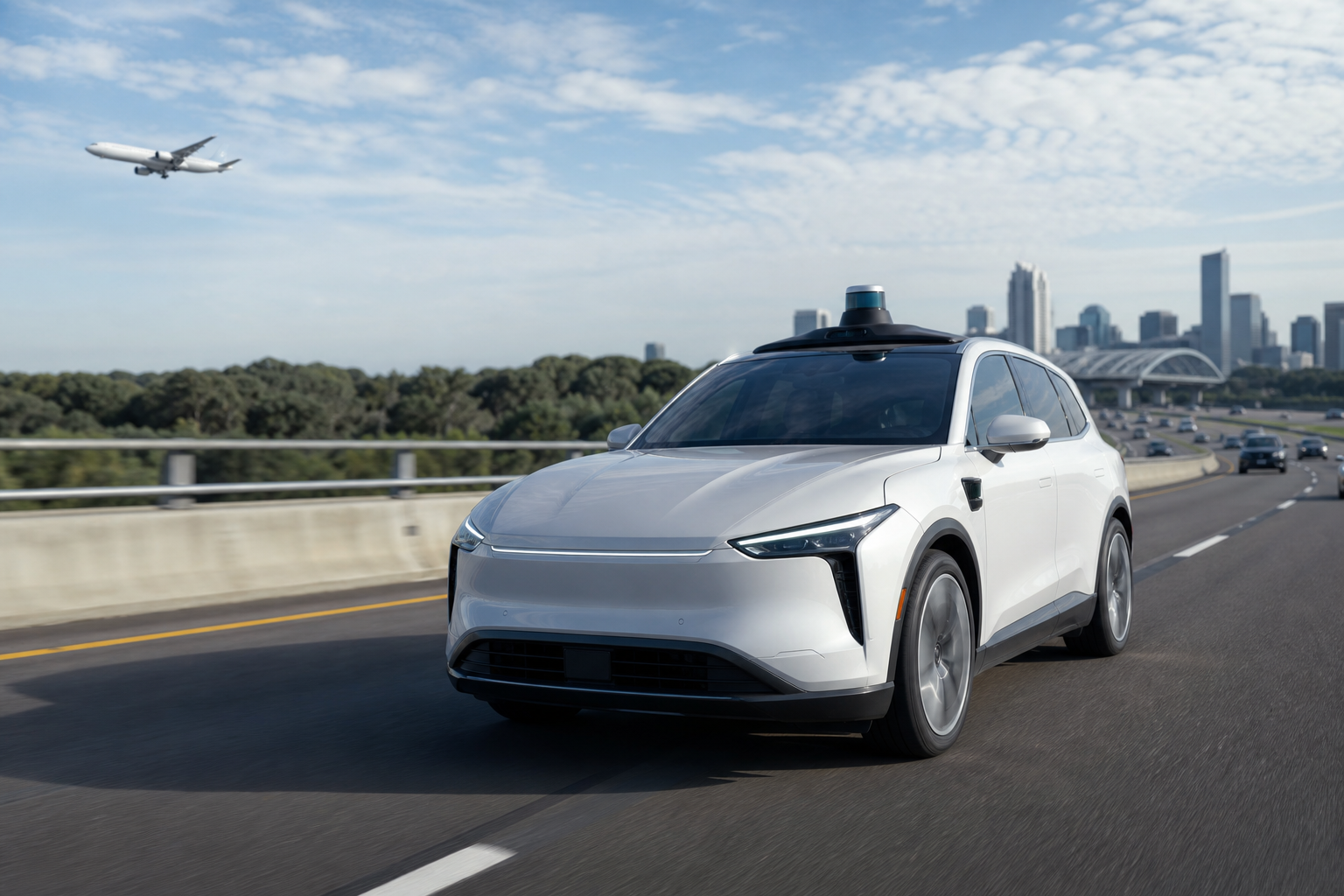
The United States Department of Transportation has released a national strategy to guide the development and deployment of automated vehicles across the country. Presented in Washington, D.C., on September 3, 2026, the plan establishes a federal framework for the 2026–2030 period and places safety, regulatory modernization and domestic innovation at the center of the government’s approach.
The strategy comes as manufacturers, technology companies and transportation operators continue to develop systems designed to perform driving tasks with limited or no direct human control. Rather than focusing on a single company or pilot project, the federal document outlines a broader direction for the sector and seeks to create more consistent conditions for automated vehicles to operate across the United States.
According to the U.S. Department of Transportation, the initiative was unveiled by Transportation Secretary Sean P. Duffy. Its objectives and planned activities cover the period from 2026 through 2030.
Safety as a central element
One of the main components of the national strategy is the creation of safety references for automated vehicles. These references are intended to support the development of systems that can be evaluated against clearer expectations as the technology moves from testing and limited operations toward wider use.
The federal focus on safety reflects one of the central challenges facing automated transportation. Vehicles must interact with roads, traffic conditions, other drivers and pedestrians in a wide range of environments. A national framework could help organize how safety expectations are understood as companies and operators develop different technical approaches.
The strategy does not eliminate the need for oversight. Instead, it presents a federal effort to establish direction for the sector while supporting the continued development of automated transportation. The balance between faster innovation and responsible deployment is likely to remain a key issue as the plan advances through 2030.
Reducing regulatory barriers
The plan also calls for reducing regulatory barriers considered unnecessary by the federal government. The objective is to make it easier for automated vehicle technologies to move from development into commercial applications, including passenger transportation and freight operations.
Regulation in the United States can involve multiple levels of government and different requirements across states. The national strategy proposes greater coordination so that automated systems can operate more consistently between jurisdictions. This approach may be particularly relevant for logistics companies and other operators whose routes cross state boundaries.
Greater consistency could also provide manufacturers and technology developers with a clearer framework for planning investments and testing programs. However, the strategy’s release does not by itself demonstrate that commercial deployment will accelerate immediately or that all regulatory differences have been resolved.
Implications for industry and transportation
The federal plan is expected to be relevant to several parts of the transportation economy. Vehicle manufacturers may use the framework when planning automated driving technologies, while technology companies may find a more coordinated national direction for development and deployment. Freight operators and passenger transportation providers are also among the sectors that could be affected by broader commercial use.
For logistics, automated vehicles could become part of efforts to improve the movement of goods across long-distance routes and different states. In passenger transportation, the technology could support new operating models. The strategy, however, establishes goals and activities rather than guaranteeing specific market outcomes, adoption levels or timelines for individual products.
Infrastructure is another part of the national discussion. Automated vehicles must operate within existing road systems and interact with the conditions found on American highways and streets. The strategy’s emphasis on interoperability points to the importance of coordination between systems, operators and jurisdictions, even though the official announcement does not establish a single nationwide technical platform.
A national framework through 2030
The Department of Transportation’s strategy positions the federal government as a coordinator of the country’s automated vehicle agenda. By linking safety references, regulatory modernization, innovation and interstate interoperability, the plan seeks to address several barriers at the same time.
The DOT’s National Strategy for Automated Vehicles will serve as the reference point for the objectives and activities planned through 2030. Its practical impact will depend on how the proposed direction is implemented and how manufacturers, technology firms, operators and state authorities respond.
For the United States, the initiative represents an attempt to accelerate automated vehicle development without separating innovation from public safety. The coming years will show whether a more coordinated federal approach can help the country expand automated transportation while maintaining clear expectations for the roads and communities where these systems will operate.