

Hot News
Roman Thermal Complex in Spain Sheds Light on Ancient Daily Life
How AI Agents Are Changing Cybersecurity—and Why Access Tokens Matter More Than Ever
A Sweet Collaboration: Where Classic Craft Meets Modern Indulgence
Escalation in Los Angeles: Military Deployment Sparks Controversy and Raises Costs
The Same Storage Bin System Serves Logistics, E-Commerce, and Pharmacies
Daily Pulse USA
  • Home
  • Technology
    TechnologyShow More
    NSA Sets U.S. Deadlines for Post-Quantum Cryptography Transition
    October 6, 2026
    Close-up de um dispositivo médico vestível fixado na parte superior do braço de uma pessoa.
    ARPA-H Announces $117.4 Million Program to Develop Personalized Biosensors
    October 5, 2026
    Dois pesquisadores usando jalecos e óculos de proteção analisam dados em um computador dentro de um laboratório.
    Brazil’s Ministry of Health approves guide for ethical use of AI in human research
    October 2, 2026
    Pessoa usando um tablet e um smartphone em ambiente interno, representando o acesso digital a serviços e informações.
    U.S. launches America.gov, a federal portal with AI-enhanced search
    September 30, 2026
    Profissionais analisam sistemas de computador em uma sala pouco iluminada, acompanhando dados relacionados à segurança cibernética.
    FBI Unveils New Strategy to Counter Cyber Threats Against the United States
    September 29, 2026
  • Politics
    PoliticsShow More
    H-1B Visa Rules Extended: What the New $100,000 Requirement Means for America’s Tech Workforce
    September 21, 2026
    Why the U.S. Is Pushing a Lighter-Touch AI Policy — and What It Could Mean for Americans
    September 1, 2026
    Karoline Leavitt’s Departure Reshapes White House Communications Three Months Before the Elections
    August 17, 2026
    How Washington’s New AI Debate Could Shape America’s Technology Rules for Years to Come
    July 30, 2026
    What Congress’s New Cybersecurity Push Could Mean for Your Bank, Phone, and Online Accounts
    What Congress’s New Cybersecurity Push Could Mean for Your Bank, Phone, and Online Accounts
    July 21, 2026
  • News
    NewsShow More
    Tablet com marcas de verificação ao lado de cédulas de dólar e um cartão de crédito.
    NCUA advances new deregulation package for U.S. credit unions
    October 16, 2026
    Rolando Bonaccorsi
    Generative AI Adoption Stalls at the Operational Level, Not the Model
    October 16, 2026
    Mulher idosa usando óculos lê documentos sobre uma mesa em ambiente interno.
    CMS details a $90 Medicare Part B rebate for eligible beneficiaries
    October 15, 2026
    Wilson Bachega Junior
    Working Dog Breeds: Canine Intelligence Beyond Affection
    October 14, 2026
    Close de um mapa topográfico detalhado destacando Idaho e regiões vizinhas nos Estados Unidos.
    USGS maps 1,271 critical mineral deposits across the United States
    October 9, 2026
  • About Us
Reading: The Backyard as a Town Square: How Migrants Built Community in Brasília
Share
Daily Pulse USADaily Pulse USA
Font ResizerAa
  • Home
Search
  • Home
  • Technology
  • Politics
  • News

Home » The Backyard as a Town Square: How Migrants Built Community in Brasília

News

The Backyard as a Town Square: How Migrants Built Community in Brasília

Sofia Valmont
Sofia Valmont
September 18, 2026
Share
Alfredo Moreira Filho

Alfredo Moreira Filho, a businessman who has lived in Brasília since 1986, founded the Club Sênior de Voley that same year in the backyard of his home in Lago Sul. This initiative takes on greater significance when we understand what Brasília was like at the time for people arriving from other regions of Brazil.

A City Without Public Squares or a Culture of Neighborly Interaction

Brasília in the 1980s had been designed for cars, not pedestrians. Its wide streets and broad avenues facilitated traffic but made casual encounters between neighbors more difficult. This absence was particularly noticeable to those who came from cities in northeastern Brazil or the Amazon region, where sidewalks and central squares still served as natural, everyday gathering places that fostered warm relationships among members of the same community.

There was no culture of social interaction or neighborly relationships comparable to what existed in Bahia or Amazonas. People did not sit outside their homes to chat and enjoy a cup of coffee, a common and cherished tradition in many other Brazilian cities. The commercial areas located between the superblocks, which were widely spaced, also did little to encourage spontaneous encounters among residents of the same area of the federal capital.

The Backyard as a Substitute for the Public Square

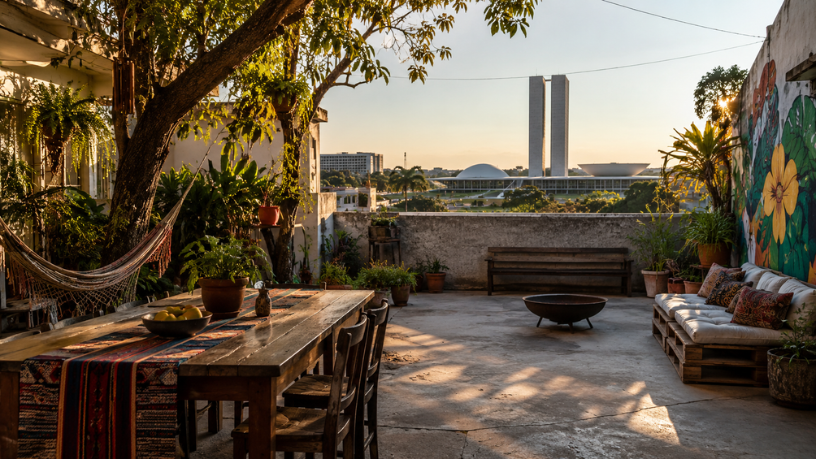
In this particular context, where the city lacked natural or spontaneous gathering places, the backyards of homes in Lago Sul eventually took on a social role that, in traditional cities, would have belonged to the town square or the neighborhood bar: a space for social interaction that had to be deliberately created by those who missed community life.

When Alfredo Moreira Filho had a volleyball court built in the backyard of his home, located in QI 11 in Lago Sul, he was not simply organizing a sporting activity. He was creating a basic social infrastructure for a group of migrants who, like him, had arrived in the capital from regions with a social culture very different from the one they encountered in Brasília.

How Did Sports Become a Way to Build Lasting Connections?

The first match, held in September 1986, was initially conceived as a strategy to build closer relationships with colleagues who served on the evaluation committee for the Tucumã Project in Pará. However, what began as a professional networking initiative quickly evolved into something much greater: a volleyball brotherhood that would bring together more than fifteen regular participants for 25 consecutive years.

Members such as Judá, Ernesto, Augusto, Morais, Luiz, Edmundo, Cabral, Arthur, Carlos, Salas, Jair, Rui, and Orlando regularly attended informal matches organized through a rotation system involving more than six different courts, each located in the backyard of a group member’s home and spread throughout Lago Sul.

Parties, Trips, and Children Who Joined the Games

Over time, the children of longtime members began participating in matches alongside the original players, raising the technical level of the games and extending the tradition to a second generation of athletes. Weekend leisure trips and parties at members’ homes completed a social life built almost entirely around this informal sports group, which continued to grow with each passing season.

Alfredo Moreira Filho, as the club’s natural coordinator, watched a network of strong friendships and relationships develop around volleyball. This network provided precisely what Brasília’s urban design failed to offer: a regular, predictable, and welcoming gathering place for people who had migrated from distant regions.

Twenty-Five Years of History Brought to an End by Osteoarthritis

The Club Sênior de Voley came to an end when its members’ joints could no longer withstand the demands of playing matches. The decision to conclude the club’s activities was marked by a celebration of its silver anniversary, closing a chapter that left a legacy extending far beyond sports.

Progressive osteoarthritis in Alfredo Moreira Filho’s knees made it impossible for him to continue playing. The condition eventually required total joint replacement surgery in the affected knees following decades of regular sporting activity.

The lasting lesson is that enduring business relationships are not built in meeting rooms but in environments where people can show their true selves. In this case, volleyball was merely the pretext. The real asset developed over 25 years was a network of trust that survived long after the final match.


TAGGED:Alfredo Moreira FilhoEmpresário Alfredo Moreira FilhoFundador e Management do Grupo Valore+O que aconteceu com Alfredo Moreira FilhoQuem é Alfredo Moreira FilhoTudo sobre Alfredo Moreira Filho
Share This Article
Facebook Email Copy Link Print
Previous Article Pedro Henrique Torres Bianchi What Do Creditors Evaluate Before Renegotiating a Debt?
Next Article How AI Agents Are Changing Cybersecurity—and Why Access Tokens Matter More Than Ever

News

Elon Musk Faces Backlash Over Grok AI After Antisemitic Responses Go Public
Technology
How the New Wave of AI Agents Is Reshaping Cybersecurity, Work, and U.S. Tech Policy
Technology
Felipe Schroeder dos Anjos
Less Plastic at the Source, Less Waste at the End: Learn More About Eco-Design for Packaging
News
AI Company Stocks Plunge and Spark Fears of the End of the Artificial Intelligence Bubble
Technology
Daily Pulse USA

Diverse voices, one pulse. Daily Pulse USA offers a comprehensive view of the American landscape, featuring stories from a variety of perspectives and communities.

Tablet com marcas de verificação ao lado de cédulas de dólar e um cartão de crédito.
NCUA advances new deregulation package for U.S. credit unions
October 16, 2026
Rolando Bonaccorsi
Generative AI Adoption Stalls at the Operational Level, Not the Model
October 16, 2026
Daily pulse USA - [email protected]
Welcome Back!

Sign in to your account

Username or Email Address
Password

Lost your password?