
Hot News
Karoline Leavitt’s Departure Reshapes White House Communications Three Months Before the Elections
Performance with Purpose: Why Does Meaning Improve Discipline?
CMS details a $90 Medicare Part B rebate for eligible beneficiaries
U.S. launches America.gov, a federal portal with AI-enhanced search
Intertemporal Law in the Tax Reform: How to Address Past Taxable Events?
Daily Pulse USA
  • Home
  • Technology
    TechnologyShow More
    NSA Sets U.S. Deadlines for Post-Quantum Cryptography Transition
    October 6, 2026
    Close-up de um dispositivo médico vestível fixado na parte superior do braço de uma pessoa.
    ARPA-H Announces $117.4 Million Program to Develop Personalized Biosensors
    October 5, 2026
    Dois pesquisadores usando jalecos e óculos de proteção analisam dados em um computador dentro de um laboratório.
    Brazil’s Ministry of Health approves guide for ethical use of AI in human research
    October 2, 2026
    Pessoa usando um tablet e um smartphone em ambiente interno, representando o acesso digital a serviços e informações.
    U.S. launches America.gov, a federal portal with AI-enhanced search
    September 30, 2026
    Profissionais analisam sistemas de computador em uma sala pouco iluminada, acompanhando dados relacionados à segurança cibernética.
    FBI Unveils New Strategy to Counter Cyber Threats Against the United States
    September 29, 2026
  • Politics
    PoliticsShow More
    H-1B Visa Rules Extended: What the New $100,000 Requirement Means for America’s Tech Workforce
    September 21, 2026
    Why the U.S. Is Pushing a Lighter-Touch AI Policy — and What It Could Mean for Americans
    September 1, 2026
    Karoline Leavitt’s Departure Reshapes White House Communications Three Months Before the Elections
    August 17, 2026
    How Washington’s New AI Debate Could Shape America’s Technology Rules for Years to Come
    July 30, 2026
    What Congress’s New Cybersecurity Push Could Mean for Your Bank, Phone, and Online Accounts
    What Congress’s New Cybersecurity Push Could Mean for Your Bank, Phone, and Online Accounts
    July 21, 2026
  • News
    NewsShow More
    Tablet com marcas de verificação ao lado de cédulas de dólar e um cartão de crédito.
    NCUA advances new deregulation package for U.S. credit unions
    October 16, 2026
    Rolando Bonaccorsi
    Generative AI Adoption Stalls at the Operational Level, Not the Model
    October 16, 2026
    Mulher idosa usando óculos lê documentos sobre uma mesa em ambiente interno.
    CMS details a $90 Medicare Part B rebate for eligible beneficiaries
    October 15, 2026
    Wilson Bachega Junior
    Working Dog Breeds: Canine Intelligence Beyond Affection
    October 14, 2026
    Close de um mapa topográfico detalhado destacando Idaho e regiões vizinhas nos Estados Unidos.
    USGS maps 1,271 critical mineral deposits across the United States
    October 9, 2026
  • About Us
Reading: NASA Advances Far-Infrared Telescope to Study Planet and Galaxy Formation
Share
Daily Pulse USADaily Pulse USA
Font ResizerAa
  • Home
Search
  • Home
  • Technology
  • Politics
  • News

Home » NASA Advances Far-Infrared Telescope to Study Planet and Galaxy Formation

News

NASA Advances Far-Infrared Telescope to Study Planet and Galaxy Formation

Ensaio Daily Pulse EUA
September 27, 2026
Share
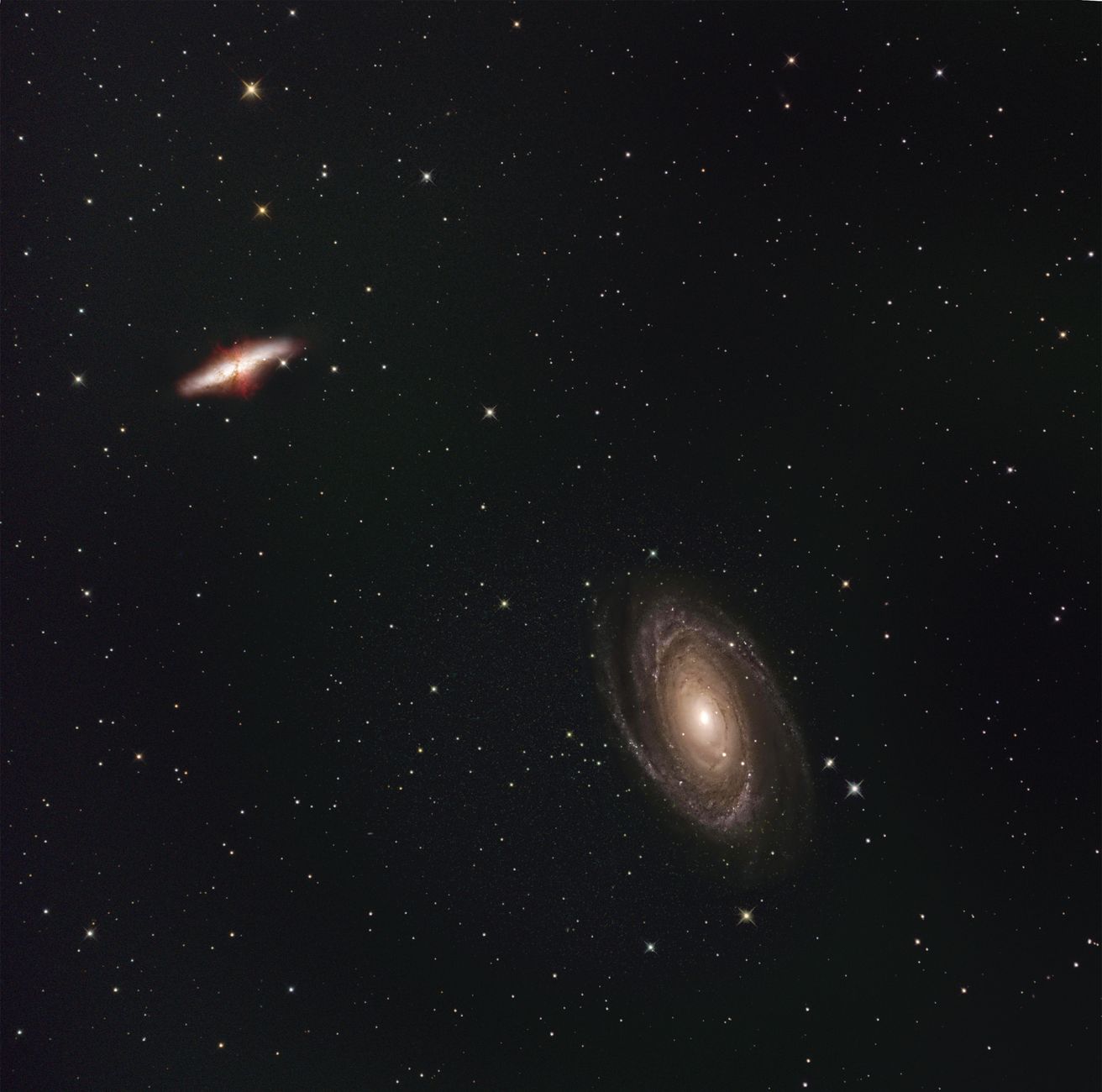
Galáxia espiral cercada por estrelas em uma imagem ilustrativa do espaço profundo

NASA has moved forward with the PRIMA mission, a planned space telescope designed to study the universe in far-infrared wavelengths. The agency announced on September 23, 2026, that the project had entered Phase B of development, an important step for a mission that could become the first member of NASA’s new Probe Explorers class of astrophysics missions.

Contents
Why far-infrared astronomy mattersMission design and possible launch dateInternational cooperation and NASA centersWhat PRIMA could add to astrophysics

PRIMA stands for Probe far-Infrared Mission for Astrophysics. Its scientific goals include examining how planets form, how galaxies and black holes evolve, and how cosmic dust and heavy elements are produced across the universe. The mission is expected to provide observations in a part of the electromagnetic spectrum that offers information not accessible in exactly the same way through existing infrared observatories or radio telescopes.

Why far-infrared astronomy matters

Far-infrared light is especially useful for studying radiation associated with cosmic dust, stellar birth regions and other structures that can be difficult to investigate at different wavelengths. Dust can obscure activity in space, but it also emits radiation that carries clues about the environments where stars and planets develop.

By observing this range of the spectrum, PRIMA could help scientists investigate the conditions surrounding the formation of planetary systems and the processes that shape galaxies over time. The mission is not being presented as a guarantee of a particular discovery. Instead, its purpose is to expand the observational tools available to astronomers and provide data about phenomena that remain difficult to study.

The telescope is expected to complement, rather than simply duplicate, the work of other observatories. The James Webb Space Telescope has expanded infrared astronomy, while radio observatories examine the universe through radio wavelengths. PRIMA would focus on the far-infrared range, creating another way to investigate cold dust, star-forming regions and the evolution of large cosmic structures.

Mission design and possible launch date

According to NASA, PRIMA would use a telescope approximately 1.8 meters in diameter. The agency has identified 2033 as a possible launch year, although that schedule depends on the mission’s progress through additional technical, programmatic and financial evaluations.

The project’s cost is capped at $1.2 billion, excluding the launch and other expenses outside the main project. PRIMA is planned to operate for five years. These figures describe the current mission framework and could remain subject to the assessments required before the spacecraft reaches later development stages.

Entering Phase B means the mission is continuing through the process used to refine its design and evaluate whether it can meet its scientific objectives within established technical and financial boundaries. The announcement does not represent a launch authorization or a final guarantee that the telescope will fly in 2033.

International cooperation and NASA centers

NASA’s Jet Propulsion Laboratory in California will manage the project. The Goddard Space Flight Center in Maryland and the Marshall Space Flight Center in Alabama are also involved in the mission’s development, linking the project to multiple U.S. centers with roles in astrophysics and space science.

The mission also includes international participation. NASA lists space agencies and partners from France, Italy, Germany, Canada, South Korea, Japan and the United Kingdom. Their involvement places PRIMA within a broader scientific effort to study the origins and evolution of planets, galaxies and the material that makes up the universe.

The mission’s next stages will determine whether its technical design, schedule and projected cost remain viable. If PRIMA passes those reviews, it could become a new tool for exploring the far-infrared universe and a flagship example of NASA’s emerging Probe Explorers mission class.

What PRIMA could add to astrophysics

Many of the questions targeted by PRIMA concern processes that unfold across immense distances and timescales. Planet formation, the growth of galaxies and the development of black holes are connected to the movement and transformation of gas, dust and heavier elements. Far-infrared observations can provide evidence about those materials and the environments in which they interact.

For NASA, the project represents a long-term investment in space-based astrophysics. For researchers, its value will depend on the quality of the data it collects and how those observations complement results from other telescopes. The immediate milestone is the move into Phase B; the broader scientific impact will only become clear if the mission advances through development and eventually reaches orbit.

Sources: NASA and NASA Goddard Space Flight Center Science News.
Share This Article
Facebook Email Copy Link Print
Previous Article Operário usando macacão azul opera uma mesa vibratória para processamento de minério em uma unidade industrial. U.S. Supports Study for Copper and Cobalt Refinery in the Democratic Republic of the Congo
Next Article Cientista realiza pesquisas em um laboratório contemporâneo equipado com instrumentos científicos. U.S. Energy Department opens $41 million call to accelerate national laboratory technologies

News

What Congress’s New Cybersecurity Push Could Mean for Your Bank, Phone, and Online Accounts
Politics
Mineral Diplomacy: A New Path for International Cooperation
Politics
Trump’s Controversial Remarks on NATO, Israel, and Iran Stir Political Debate
Politics
Under Trump’s Deadline, US and EU Push Forward with Fragile Trade Deal
News
Daily Pulse USA

Diverse voices, one pulse. Daily Pulse USA offers a comprehensive view of the American landscape, featuring stories from a variety of perspectives and communities.

Tablet com marcas de verificação ao lado de cédulas de dólar e um cartão de crédito.
NCUA advances new deregulation package for U.S. credit unions
October 16, 2026
Rolando Bonaccorsi
Generative AI Adoption Stalls at the Operational Level, Not the Model
October 16, 2026
Daily pulse USA - [email protected]
Welcome Back!

Sign in to your account

Username or Email Address
Password

Lost your password?