
Hot News
Judicial Reorganization: What Is the Judge’s Role and How Does It Influence the Outcome? Find Out in This Article
H-1B Visa Rules Extended: What the New $100,000 Requirement Means for America’s Tech Workforce
NASA Medical Findings From Recent Space Mission Raise New Questions About Human Limits
U.S. Energy Department opens $41 million call to accelerate national laboratory technologies
Lack of Data Literacy: The Silent Mistake That Compromises Business Decisions, According to Andre de Barros Faria
Daily Pulse USA
  • Home
  • Technology
    TechnologyShow More
    NSA Sets U.S. Deadlines for Post-Quantum Cryptography Transition
    October 6, 2026
    Close-up de um dispositivo médico vestível fixado na parte superior do braço de uma pessoa.
    ARPA-H Announces $117.4 Million Program to Develop Personalized Biosensors
    October 5, 2026
    Dois pesquisadores usando jalecos e óculos de proteção analisam dados em um computador dentro de um laboratório.
    Brazil’s Ministry of Health approves guide for ethical use of AI in human research
    October 2, 2026
    Pessoa usando um tablet e um smartphone em ambiente interno, representando o acesso digital a serviços e informações.
    U.S. launches America.gov, a federal portal with AI-enhanced search
    September 30, 2026
    Profissionais analisam sistemas de computador em uma sala pouco iluminada, acompanhando dados relacionados à segurança cibernética.
    FBI Unveils New Strategy to Counter Cyber Threats Against the United States
    September 29, 2026
  • Politics
    PoliticsShow More
    H-1B Visa Rules Extended: What the New $100,000 Requirement Means for America’s Tech Workforce
    September 21, 2026
    Why the U.S. Is Pushing a Lighter-Touch AI Policy — and What It Could Mean for Americans
    September 1, 2026
    Karoline Leavitt’s Departure Reshapes White House Communications Three Months Before the Elections
    August 17, 2026
    How Washington’s New AI Debate Could Shape America’s Technology Rules for Years to Come
    July 30, 2026
    What Congress’s New Cybersecurity Push Could Mean for Your Bank, Phone, and Online Accounts
    What Congress’s New Cybersecurity Push Could Mean for Your Bank, Phone, and Online Accounts
    July 21, 2026
  • News
    NewsShow More
    Tablet com marcas de verificação ao lado de cédulas de dólar e um cartão de crédito.
    NCUA advances new deregulation package for U.S. credit unions
    October 16, 2026
    Rolando Bonaccorsi
    Generative AI Adoption Stalls at the Operational Level, Not the Model
    October 16, 2026
    Mulher idosa usando óculos lê documentos sobre uma mesa em ambiente interno.
    CMS details a $90 Medicare Part B rebate for eligible beneficiaries
    October 15, 2026
    Wilson Bachega Junior
    Working Dog Breeds: Canine Intelligence Beyond Affection
    October 14, 2026
    Close de um mapa topográfico detalhado destacando Idaho e regiões vizinhas nos Estados Unidos.
    USGS maps 1,271 critical mineral deposits across the United States
    October 9, 2026
  • About Us
Reading: U.S. Energy Department opens $41 million call to accelerate national laboratory technologies
Share
Daily Pulse USADaily Pulse USA
Font ResizerAa
  • Home
Search
  • Home
  • Technology
  • Politics
  • News

Home » U.S. Energy Department opens $41 million call to accelerate national laboratory technologies

News

U.S. Energy Department opens $41 million call to accelerate national laboratory technologies

Ensaio Daily Pulse EUA
September 27, 2026
Share
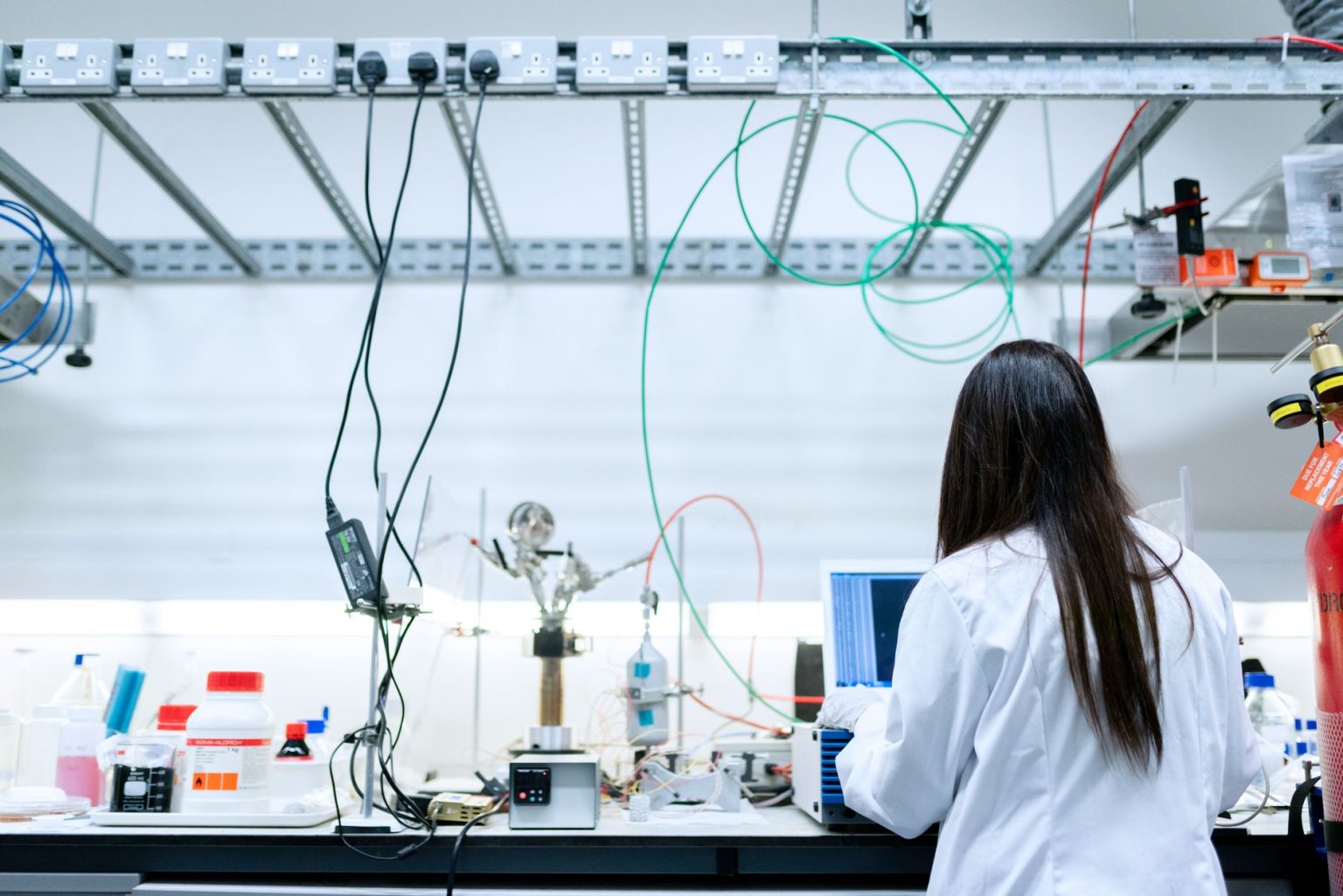
Cientista realiza pesquisas em um laboratório contemporâneo equipado com instrumentos científicos.

The U.S. Department of Energy announced on September 24, 2026, a public funding opportunity of up to $41 million to help move technologies developed at national laboratories toward commercial products and services. The initiative is designed to bring federally funded research closer to companies, investors, universities, nonprofit organizations and entrepreneurs interested in technology commercialization.

Contents
National laboratories have until November to submit conceptsDOE also selects six projects for more than $18 millionCommercialization targets strategic U.S. sectors

The funding opportunity combines the Technology Commercialization Fund with the Core Laboratory Infrastructure for Market Readiness program, known as CLIMR. Together, the programs focus on creating partnerships and infrastructure that can help transform laboratory research into solutions with potential applications in the private sector.

According to the U.S. Department of Energy, the initiative covers five priority areas connected to the agency’s activities: critical minerals and energy innovation; cybersecurity and energy security; hydrocarbons and geothermal energy; electricity; and nuclear energy.

National laboratories have until November to submit concepts

National laboratories can submit concept papers for the new opportunity until November 3, 2026, at 3 p.m. Eastern Time. The deadline establishes the next formal step for laboratories seeking to develop commercialization strategies and engage with potential private-sector partners.

The call reflects an effort by the federal government to reduce the distance between scientific discovery and market adoption. Rather than focusing only on basic research grants, the initiative emphasizes the structures, relationships and resources needed to make laboratory-developed technologies more accessible to companies and other organizations.

This approach is particularly relevant in sectors such as advanced energy, cybersecurity, nuclear technology and scientific software, where research often requires specialized facilities, technical validation and long development cycles before reaching commercial users.

DOE also selects six projects for more than $18 million

Alongside the new call, the Energy Department announced the selection of six projects that will receive more than $12 million in federal funding. The projects will be supplemented by more than $6 million in private-sector contributions, bringing the combined value of the selected efforts to more than $18 million.

The selected projects involve artificial intelligence, nuclear and fusion energy, scientific software and partnership models designed to improve collaboration between national laboratories and companies. The funding structure illustrates how public resources can be combined with private capital and expertise during the process of preparing research for broader use.

One of the initiatives, called COYOTE, is intended to use entity records and an artificial intelligence tool to connect technologies, organizations and business opportunities across the Department of Energy’s laboratory system. The project seeks to improve the way potential matches are identified within a large and diverse research network.

Another project, known as ELEMENT, proposes turning more than 20 software tools developed by national laboratories into commercial applications hosted on the internet. The initiative points to a possible route for making specialized scientific capabilities available beyond the institutions where they were originally created.

Commercialization targets strategic U.S. sectors

The Department of Energy’s program places technology transfer within a broader national context. Critical minerals, electricity systems, nuclear energy, geothermal resources and cybersecurity are all linked to industrial competitiveness, energy security and technological independence in the United States.

By encouraging laboratories to work with businesses, investors and universities, the initiative aims to address a recurring challenge in public research: promising technologies may require additional development, testing, business planning or infrastructure before they can attract customers and private investment.

The CLIMR projects also show that commercialization can involve more than a single invention. It may include digital platforms, shared tools, partnership frameworks and methods for connecting technical capabilities with organizations capable of developing them further.

The new opportunity therefore offers a mechanism for national laboratories to present ideas that are not only scientifically relevant but also prepared for engagement with the market. The next milestone will be the submission of concept papers by the November 3 deadline, after which the Department of Energy will continue the evaluation and selection process established for the funding opportunity.

Details about the selected CLIMR projects are available in the DOE project announcement. Official information on funding opportunities and submission procedures is provided through the DOE CMEI eXCHANGE platform.


Share This Article
Facebook Email Copy Link Print
Previous Article Galáxia espiral cercada por estrelas em uma imagem ilustrativa do espaço profundo NASA Advances Far-Infrared Telescope to Study Planet and Galaxy Formation
Next Article Dois pesquisadores trabalham com um braço robótico em um laboratório de tecnologia. NSF expands $1.5 billion program to accelerate AI and physical technology research

News

Why Washington’s New AI Policy Fight Could Shape the Future of Technology, Privacy, and Business in America
Politics
Rodrigo Balassiano explores how the convergence of regulation and technology is transforming fund management, highlighting the role of sandboxes and discreet innovation.
The Regulatory-Technological Convergence: Rodrigo Balassiano Discusses the Role of the Sandbox and Stealth Innovation in Fund Management
News
AI Company Stocks Plunge and Spark Fears of the End of the Artificial Intelligence Bubble
Technology
Why Americans Are Being Asked to Verify Their Identity More Often Online in 2026
News
Daily Pulse USA

Diverse voices, one pulse. Daily Pulse USA offers a comprehensive view of the American landscape, featuring stories from a variety of perspectives and communities.

Tablet com marcas de verificação ao lado de cédulas de dólar e um cartão de crédito.
NCUA advances new deregulation package for U.S. credit unions
October 16, 2026
Rolando Bonaccorsi
Generative AI Adoption Stalls at the Operational Level, Not the Model
October 16, 2026
Daily pulse USA - [email protected]
Welcome Back!

Sign in to your account

Username or Email Address
Password

Lost your password?