

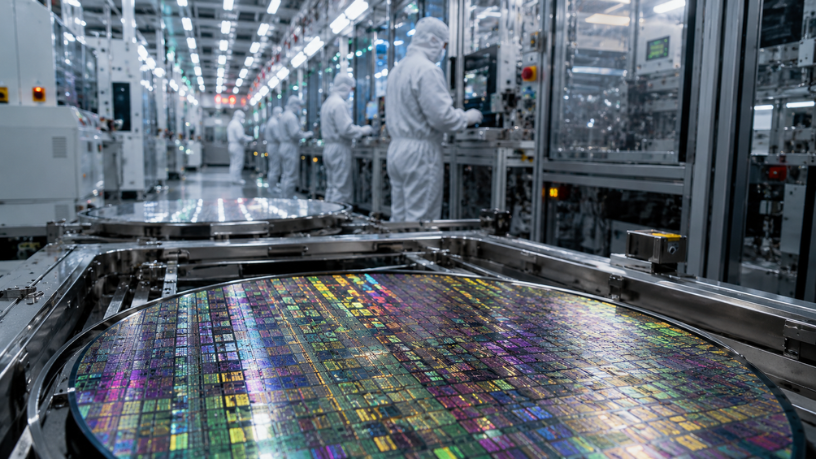
The global race for semiconductors is no longer just an industrial issue. It has become a central topic in discussions about innovation, economic security, and technological competitiveness. In recent years, various measures designed to limit China’s progress in the semiconductor sector have been promoted as a way to preserve Western technological leadership. However, emerging results suggest that some of these strategies may be producing outcomes opposite to those originally intended. This article examines how the semiconductor dispute is transforming the global industry, its impact on businesses and governments, and why the pursuit of technological supremacy can generate unexpected consequences.
Semiconductors are the foundation of the modern digital economy. They power smartphones, computers, vehicles, medical equipment, industrial systems, and artificial intelligence applications. Countries that lead in semiconductor technology enjoy strategic advantages that extend far beyond the electronics sector.
As a result, governments increasingly view chip manufacturing as a matter of national interest. Concerns about external dependencies have encouraged nations to strengthen domestic investments, support local supply chains, and implement measures to protect technologies considered critical to economic and national security.
Within this context, the relationship between the United States and China has become one of the defining factors shaping the future of the semiconductor industry. The original objective of restricting China’s access to advanced technologies appeared straightforward. By limiting access to strategic equipment, software, and components, policymakers hoped to slow Chinese technological development and maintain existing competitive advantages.
However, innovation rarely follows a predictable path. Rather than completely halting China’s technological progress, these restrictions have created powerful incentives for the country to accelerate investment in domestic research, manufacturing capabilities, and technological self-sufficiency.
The history of industrial development demonstrates that barriers often encourage adaptation. When access to foreign technologies becomes more difficult, governments and companies are pushed to develop alternative solutions. In China’s case, this process has led to increased investments in semiconductor design, manufacturing infrastructure, engineering talent, and long-term innovation strategies.
This shift highlights an important reality of the global technology market. Competitive pressure can sometimes stimulate the very growth it was intended to prevent. The more strategic a technology becomes, the stronger the motivation for nations to develop independent capabilities and reduce reliance on external suppliers.
At the same time, the semiconductor industry remains deeply interconnected. Modern chip production depends on a complex global network involving equipment manufacturers, software developers, raw material suppliers, foundries, and research institutions located across multiple countries. Attempting to separate these ecosystems entirely presents significant economic and operational challenges.
For many technology companies, restrictions create additional costs and uncertainties. Businesses must adapt supply chains, identify alternative partners, and manage growing geopolitical risks. These adjustments can slow innovation cycles and increase expenses throughout the technology sector.
Another important consequence involves the acceleration of technological competition itself. As governments invest heavily in semiconductor development, the industry experiences increased funding, expanded research efforts, and stronger incentives for innovation. While competition can create short-term tensions, it may also contribute to long-term technological progress by encouraging new breakthroughs and alternative approaches.
Artificial intelligence has further intensified the strategic importance of advanced chips. High-performance semiconductors are essential for training and deploying modern AI systems, making control over these technologies a critical priority for governments and corporations alike. As AI adoption expands across industries, semiconductor leadership becomes increasingly tied to broader economic influence and national competitiveness.
The broader lesson is that technological leadership cannot be maintained solely through restrictions. Sustainable advantages are typically built through continuous innovation, investment in talent, research excellence, and a strong industrial ecosystem. Efforts to slow competitors may provide temporary benefits, but they rarely replace the need for long-term innovation strategies.
The semiconductor race is ultimately reshaping the global technology landscape. Rather than creating a clear winner and loser, it is driving structural changes that affect supply chains, investment patterns, international partnerships, and industrial policy worldwide.
Looking ahead, the future of the semiconductor industry will likely be defined not only by competition but also by resilience and adaptability. Nations that successfully combine innovation, manufacturing strength, and strategic investment will be best positioned to lead the next generation of technological development. As the global chip race continues to evolve, its effects will extend far beyond the technology sector, influencing economic growth, geopolitical relationships, and the future of digital transformation itself.
Author: Diego Velázquez