
Hot News
Surprising Job Growth in the US in March 2025: What Does This Mean for the Economy?
Trump’s Copper Tariffs Set to Shake Global Metal Markets in August
Create Photos That Tell Stories and Evoke Emotions for Your E-Commerce: Turn Images into Experiences with FotoModel
A Life-Changing Scholarship Opportunity for Global Studies
U.S. Job Market Loses Steam in June, Raising Concerns for American Workers
Daily Pulse USA
  • Home
  • Technology
    TechnologyShow More
    NSA Sets U.S. Deadlines for Post-Quantum Cryptography Transition
    October 6, 2026
    Close-up de um dispositivo médico vestível fixado na parte superior do braço de uma pessoa.
    ARPA-H Announces $117.4 Million Program to Develop Personalized Biosensors
    October 5, 2026
    Dois pesquisadores usando jalecos e óculos de proteção analisam dados em um computador dentro de um laboratório.
    Brazil’s Ministry of Health approves guide for ethical use of AI in human research
    October 2, 2026
    Pessoa usando um tablet e um smartphone em ambiente interno, representando o acesso digital a serviços e informações.
    U.S. launches America.gov, a federal portal with AI-enhanced search
    September 30, 2026
    Profissionais analisam sistemas de computador em uma sala pouco iluminada, acompanhando dados relacionados à segurança cibernética.
    FBI Unveils New Strategy to Counter Cyber Threats Against the United States
    September 29, 2026
  • Politics
    PoliticsShow More
    H-1B Visa Rules Extended: What the New $100,000 Requirement Means for America’s Tech Workforce
    September 21, 2026
    Why the U.S. Is Pushing a Lighter-Touch AI Policy — and What It Could Mean for Americans
    September 1, 2026
    Karoline Leavitt’s Departure Reshapes White House Communications Three Months Before the Elections
    August 17, 2026
    How Washington’s New AI Debate Could Shape America’s Technology Rules for Years to Come
    July 30, 2026
    What Congress’s New Cybersecurity Push Could Mean for Your Bank, Phone, and Online Accounts
    What Congress’s New Cybersecurity Push Could Mean for Your Bank, Phone, and Online Accounts
    July 21, 2026
  • News
    NewsShow More
    Tablet com marcas de verificação ao lado de cédulas de dólar e um cartão de crédito.
    NCUA advances new deregulation package for U.S. credit unions
    October 16, 2026
    Rolando Bonaccorsi
    Generative AI Adoption Stalls at the Operational Level, Not the Model
    October 16, 2026
    Mulher idosa usando óculos lê documentos sobre uma mesa em ambiente interno.
    CMS details a $90 Medicare Part B rebate for eligible beneficiaries
    October 15, 2026
    Wilson Bachega Junior
    Working Dog Breeds: Canine Intelligence Beyond Affection
    October 14, 2026
    Close de um mapa topográfico detalhado destacando Idaho e regiões vizinhas nos Estados Unidos.
    USGS maps 1,271 critical mineral deposits across the United States
    October 9, 2026
  • About Us
Reading: NSF expands $1.5 billion program to accelerate AI and physical technology research
Share
Daily Pulse USADaily Pulse USA
Font ResizerAa
  • Home
Search
  • Home
  • Technology
  • Politics
  • News

Home » NSF expands $1.5 billion program to accelerate AI and physical technology research

News

NSF expands $1.5 billion program to accelerate AI and physical technology research

Ensaio Daily Pulse EUA
September 28, 2026
Share
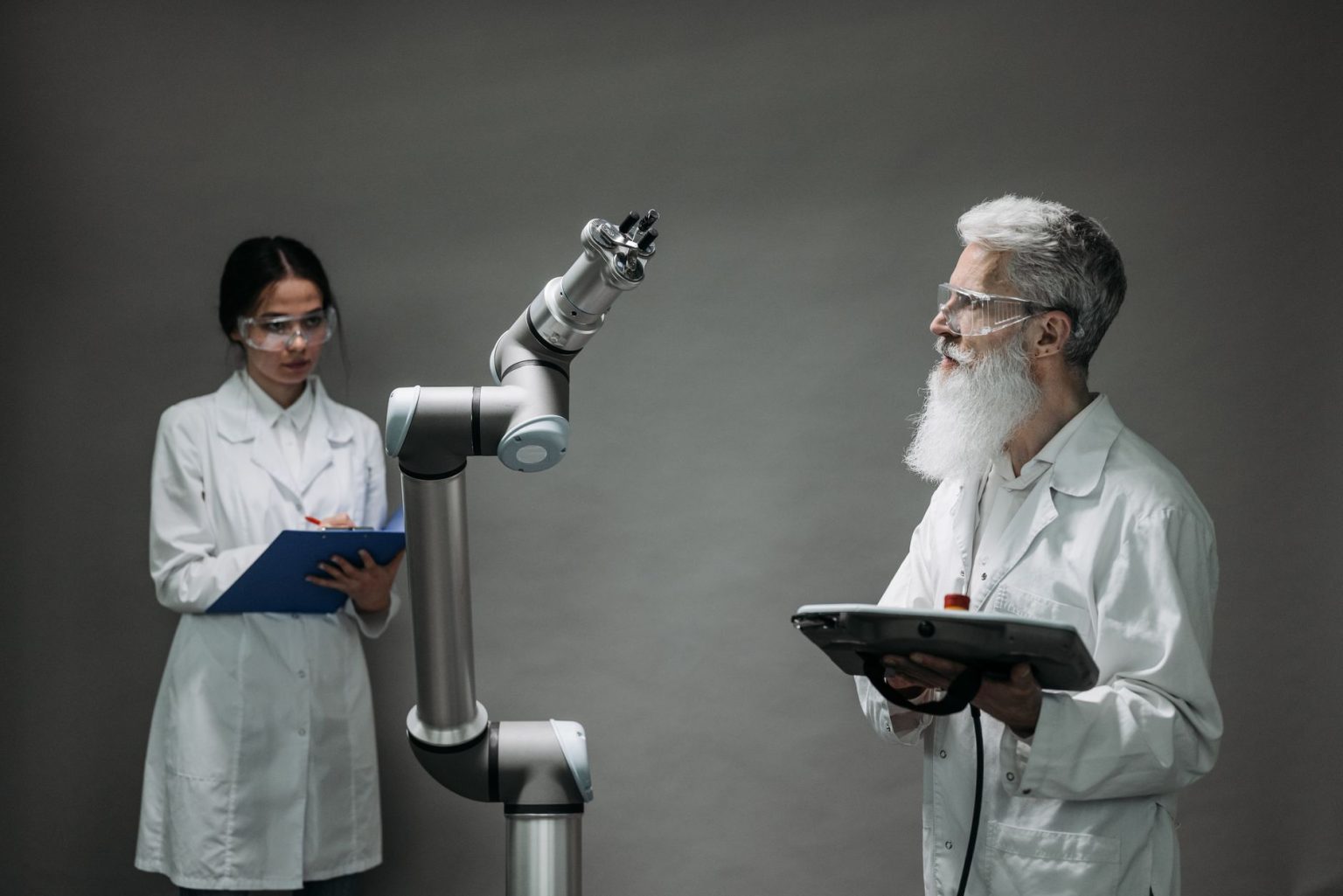
Dois pesquisadores trabalham com um braço robótico em um laboratório de tecnologia.

The National Science Foundation announced three additional themes for its NSF X-Labs initiative on September 16, 2026, expanding a program designed to support high-impact scientific and technological challenges. The initiative could provide up to $1.5 billion over the next decade and is aimed at projects that connect fundamental research with practical technology development.

Contents
AI research moves closer to the physical worldThree themes within the NSF X-Labs initiativeA different model for public technology fundingWhat organizations should watch next

The main funding opportunity currently presented by the agency focuses on artificial intelligence for physical systems. The topic covers technologies that allow intelligent systems to interact with real-world environments, including advanced sensors, robotics, embedded systems, human-robot interfaces and broader cyber-physical structures.

According to the National Science Foundation, the model is intended to bring together researchers, engineers, entrepreneurs and technologists around specific technical objectives. Rather than relying only on conventional academic grant structures, NSF X-Labs is designed to support dedicated teams with operational autonomy and development milestones.

AI research moves closer to the physical world

Artificial intelligence systems are increasingly being developed for environments where software must sense, interpret and respond to physical conditions. The NSF opportunity places that interaction at the center of its research agenda, with potential applications in robotics, manufacturing, emergency response, health care, defense and scientific discovery.

The emphasis on physical systems also reflects the technical challenges involved in deploying AI beyond digital platforms. Machines operating in hospitals, factories, laboratories or emergency zones must process information from sensors, respond to changing conditions and interact safely with people and equipment. The funding theme is intended to support technologies capable of addressing those requirements.

The opportunity may be relevant to universities, deep-tech startups, independent laboratories, robotics companies and organizations involved in applied research. The agency’s approach could also encourage collaboration between groups that traditionally work in separate fields, such as computer science, mechanical engineering, materials science, neuroscience and industrial technology.

Three themes within the NSF X-Labs initiative

In addition to artificial intelligence for physical systems, the NSF introduced two themes that are expected to receive future funding calls later in 2026. The first, From Sequence to Function, is focused on the relationship between protein sequences, biological structures and their functions.

The second, Computation at the Limit of Physics, addresses new computing architectures and methods that could operate closer to the physical limits of energy efficiency. The theme points to research into how computation can continue to advance as energy consumption becomes a central constraint for increasingly complex systems.

The NSF has not yet opened applications for these two future topics. The agency said complete details, deadlines and guidance will be released at a later stage. For the artificial intelligence opportunity, the next public presentation is scheduled for October 14, 2026, at 1 p.m. Eastern Time.

A different model for public technology funding

The NSF X-Labs program is structured around the idea that some scientific challenges require more than isolated research projects. Its proposed teams would work toward defined technical goals while retaining the flexibility to adjust their methods as findings emerge.

This format is intended to reduce the time between a scientific discovery and its practical use. The NSF says the initiative could support the creation of technology platforms, new economic sectors and capabilities considered important to U.S. competitiveness.

By combining public funding with participation from researchers, companies and technology developers, the program creates a bridge between laboratory work and commercialization. That does not guarantee that each project will result in a product or company, but it establishes a structure focused on measurable progress and real-world impact.

What organizations should watch next

Organizations interested in the AI and physical systems theme will need to follow the agency’s official materials for eligibility requirements, submission procedures and detailed milestones. The NSF X-Labs updates page is expected to provide additional information as the opportunity develops.

The scheduled webinar may offer further context on the scope of the call and the types of teams the NSF hopes to attract. The agency’s event page lists the presentation for October 14. For U.S. universities, startups and research organizations, the initiative represents a significant federal effort to connect artificial intelligence, robotics and advanced engineering with national scientific and economic priorities.

Share This Article
Facebook Email Copy Link Print
Previous Article Cientista realiza pesquisas em um laboratório contemporâneo equipado com instrumentos científicos. U.S. Energy Department opens $41 million call to accelerate national laboratory technologies
Next Article Mulher apresenta conceitos de evolução digital, inteligência artificial e big data durante um seminário. G20 Approves Principles to Accelerate Innovation, AI and Emerging Technologies

News

Smart Mining Gains Ground in the Global Race for Net Zero Emissions
Technology
Daugliesi Giacomasi Souza
Augmented Reality Décor: When the Party Comes to Life on Your Guests’ Phones
News
Surprising Job Growth in the US in March 2025: What Does This Mean for the Economy?
News
Leonardo Manzan explores legal uncertainties around past events in the context of tax reform.
Intertemporal Law in the Tax Reform: How to Address Past Taxable Events?
News
Daily Pulse USA

Diverse voices, one pulse. Daily Pulse USA offers a comprehensive view of the American landscape, featuring stories from a variety of perspectives and communities.

Tablet com marcas de verificação ao lado de cédulas de dólar e um cartão de crédito.
NCUA advances new deregulation package for U.S. credit unions
October 16, 2026
Rolando Bonaccorsi
Generative AI Adoption Stalls at the Operational Level, Not the Model
October 16, 2026
Daily pulse USA - [email protected]
Welcome Back!

Sign in to your account

Username or Email Address
Password

Lost your password?