

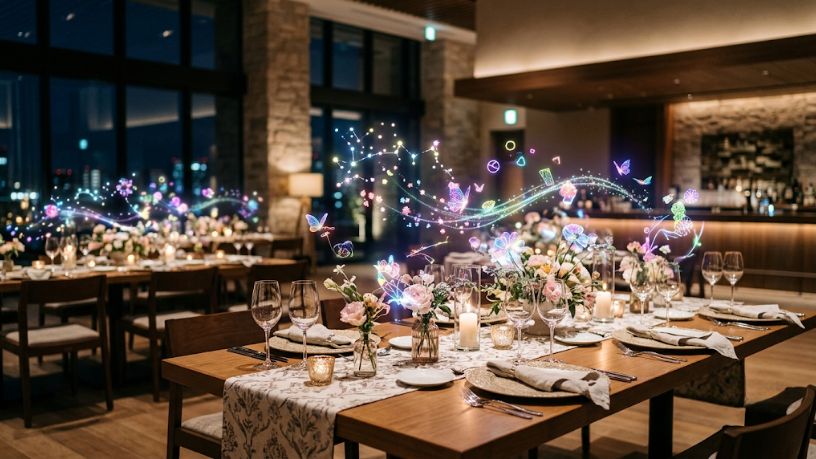
The rapid evolution of mobile technology has officially made its way into the events industry. According to Daugliesi Giacomasi Souza, founder of DGdecor, augmented reality is no longer limited to corporate events—it has become part of birthday parties, weddings, and quinceañeras or sweet sixteen celebrations. By simply pointing a smartphone camera at a backdrop, photo display, or printed invitation, guests can watch digital elements such as animations, personalized messages, and visual effects come to life over the real-world scene displayed on their screens.
In this article, we’ll explore how this technology works in practice and why it is already becoming part of celebrations of all sizes and budgets across Brazil.
What Is Augmented Reality Décor?
Augmented reality (AR) overlays digital content onto the real world viewed through a smartphone camera, without requiring special headsets or expensive equipment like virtual reality. In practice, guests point their phones at a specific physical object—usually identified by a subtle visual marker—and the screen displays animated digital content layered seamlessly over the real object or setting.
Unlike a traditional QR code that simply opens a website or full-screen video, AR keeps the digital content anchored to the physical environment. The animation appears to belong to the actual décor, following the movement of the camera as guests explore the venue.
According to Daugliesi Giacomasi Souza, this accessibility is what sets today’s AR experiences apart from earlier event technologies that were reserved for large productions with significant budgets. Many of the augmented reality solutions currently used at events run directly through a smartphone’s web browser, eliminating the need to download dedicated apps. This reduces barriers to participation and encourages more guests—regardless of age or technological familiarity—to enjoy the experience throughout the celebration.
How Does the Experience Work on Guests’ Phones?
The process is typically straightforward. A discreet QR code placed on the invitation, backdrop, or decorative sign directs the guest’s smartphone to a dedicated webpage or AR filter when scanned. From there, the guest points the camera at the corresponding decorative element and watches a custom animation appear on the screen.
Examples include confetti falling from a backdrop, animated characters appearing beside the cake table, or handwritten messages emerging over a welcome sign.
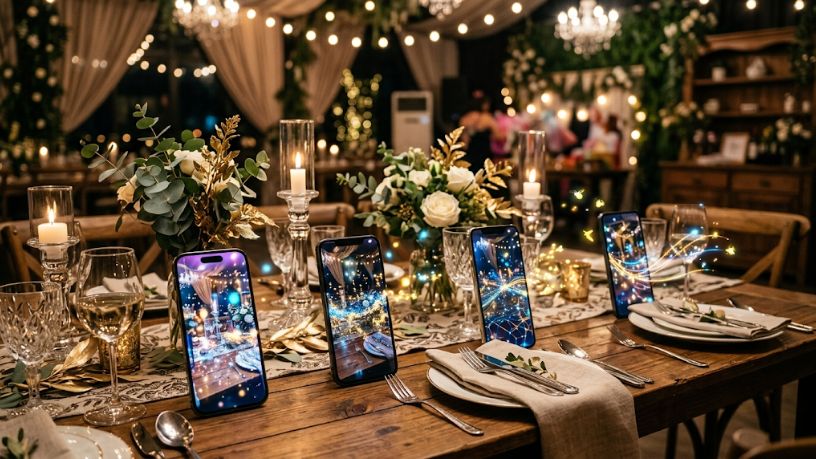
In Daugliesi Giacomasi Souza’s view, the key to a successful implementation is keeping the experience as simple as possible. Every additional step—such as creating an account or downloading an app—can discourage guests before they even reach the promised animation. Testing the experience in advance, ensuring a reliable internet connection at the venue, and placing QR codes in well-lit, easily accessible locations help prevent frustration and allow the technology to enhance the event rather than become a source of inconvenience.
Where Is Augmented Reality Already Being Used at Events?
Coming-of-age celebrations such as quinceañeras and sweet sixteen parties have begun incorporating augmented reality into photo displays and themed backdrops, allowing timelines, fantasy worlds, or galaxy-inspired concepts to come alive on each guest’s smartphone.
Weddings have adopted similar features through invitations and menus, where a discreet QR code reveals animations connected to the couple’s story or provides interactive details about the dishes served during the reception.
Corporate events are also embracing the technology by presenting products in three-dimensional interactive experiences, allowing attendees to rotate and explore items virtually before physically handling them.
As Daugliesi Giacomasi Souza explains, this movement reflects a broader trend within the events industry toward phygital experiences—a blend of physical and digital interactions. Projection mapping, themed photo booths with custom filters, and augmented reality activations are increasingly being incorporated into event design from the earliest planning stages rather than added as last-minute attractions.
Why Does This Technology Go Beyond Visual Effects?
The value of augmented reality at events extends far beyond its initial wow factor. It transforms guests from passive observers into active participants in the décor itself. A backdrop that comes to life through a smartphone naturally encourages guests to record videos and share them on social media, extending the celebration’s reach well beyond the event itself.
Contrary to what many event organizers assume, augmented reality experiences can also fit within modest budgets. Many platforms used to create basic AR filters and animations are relatively affordable compared to other aspects of event production.
As Daugliesi Giacomasi Souza points out, technology is most effective when it strengthens the event’s story rather than serving as an isolated special effect. An animation inspired by the birthday honoree’s journey, the couple’s love story, or a children’s party theme creates a much deeper emotional connection than a generic visual effect with no relationship to the celebration’s concept.
Ultimately, augmented reality demonstrates that party décor doesn’t have to disappear when the lights go out. Instead, it continues to live on through the videos, photos, and memories captured by everyone who shared the experience.