

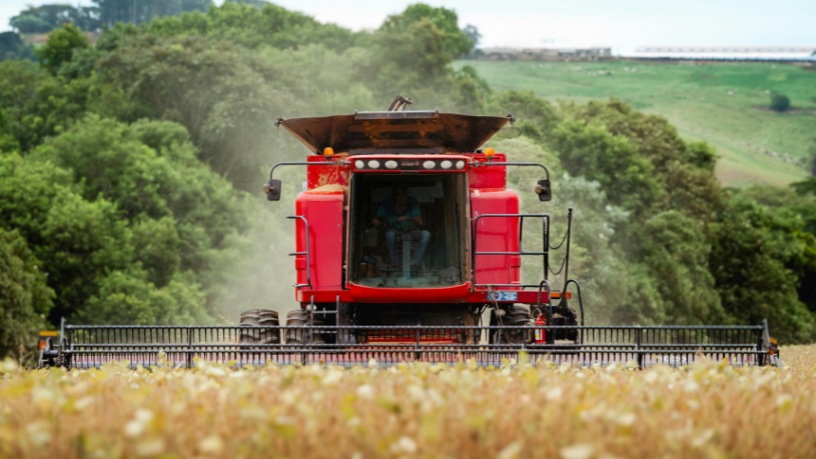
The adoption of autonomous tractors in the U.S. sugar industry marks a significant step in the modernization of agribusiness. This article analyzes how this technology is being deployed on a large scale, the impact it has on productivity and rural labor structures, and how it reshapes the sugar sector in an increasingly competitive and technology-driven global environment. It also explores the practical effects of this innovation on operational costs, production efficiency, and the future of precision agriculture.
Digitalization of farming as the new foundation of modern agribusiness
The use of autonomous machinery in sugarcane cultivation and sugar production represents a structural shift in how agriculture is conducted. Instead of relying exclusively on human operators, the sector now integrates intelligent systems capable of performing tasks with high precision, reducing errors and optimizing execution time.
In the United States, this movement does not emerge in isolation. It is part of a broader trend of farm digitalization, where sensors, artificial intelligence, and autonomous navigation systems work together in an integrated way. This technological ecosystem enables tractors to perform activities such as soil preparation, planting, and field management with minimal human intervention.
The relevance of this advancement becomes even more evident when considering the scale of the U.S. sugar industry, which requires continuous and highly coordinated operations to remain competitive in a globalized market.
The United States as a laboratory for agricultural innovation
The implementation of autonomous tractors in the sugar sector highlights the role of the United States as a testing ground for agricultural innovation. Large-scale farms and high levels of mechanization create favorable conditions for adopting advanced technologies before they are widely used in other regions.
This environment allows companies to refine systems in real operational conditions, improving reliability and efficiency. As a result, innovations tested in American agriculture often set benchmarks for global adoption, influencing farming practices in other major agricultural economies.
The sugar industry, in particular, benefits from this dynamic due to its dependence on efficiency, timing, and large-scale coordination across extensive production areas.
Operational efficiency and the transformation of rural work
One of the most immediate impacts of autonomous tractors is the increase in operational efficiency. Machines equipped with advanced navigation systems can operate for longer hours, maintain consistent performance, and reduce variability caused by human operation.
This shift also transforms rural labor dynamics. While automation reduces the need for manual operation in certain tasks, it increases demand for skilled workers capable of managing data systems, monitoring equipment, and optimizing digital agricultural processes.
Rather than eliminating labor entirely, this transformation redefines the skill profile required in the sector, moving agriculture closer to a technology-driven industry.
Economic impact and long-term competitiveness
The integration of autonomous tractors in sugar production also has a direct economic impact. Reduced fuel consumption, optimized field operations, and improved productivity contribute to lower operational costs over time.
In a global market where sugar prices are highly sensitive to efficiency and scale, these gains become strategically important. Producers that adopt automation early gain a competitive advantage, positioning themselves more strongly in international trade dynamics.
This shift also reinforces the importance of technological investment as a core driver of competitiveness in modern agribusiness.
A structural shift in agriculture and its future direction
The expansion of autonomous tractors in the U.S. sugar industry reflects a broader structural shift in agriculture, where data-driven decision-making and machine autonomy are becoming central elements of production systems.
As technology continues to evolve, the integration between artificial intelligence, robotics, and agricultural management is expected to deepen further. This progression points toward a future in which farming operations are increasingly coordinated by intelligent systems capable of adapting in real time to environmental and production conditions.
In this context, the sugar industry becomes a clear example of how traditional sectors are being reshaped by technological innovation, redefining productivity standards and long-term industry expectations.
Author: Diego Velázquez