

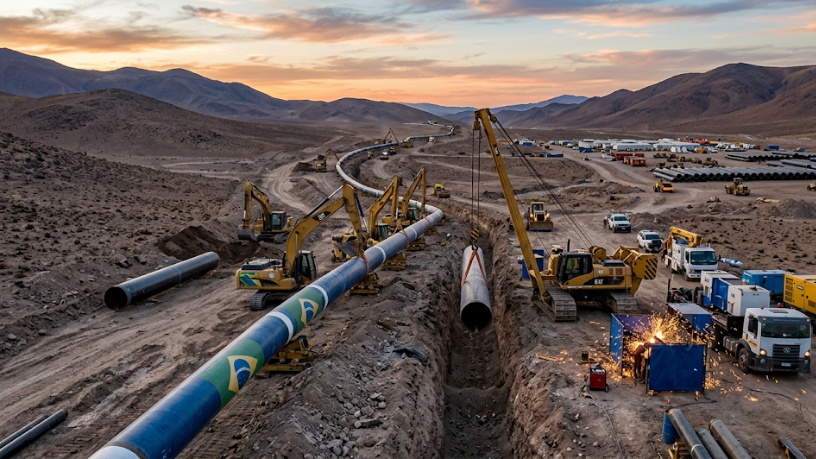
Paulo Roberto Gomes Fernandes, an entrepreneur, believes that the presence of Brazilian engineering in international pipeline projects has been gaining relevance as the global market increasingly values more specialized solutions. In projects involving tunnels, difficult terrain, sensitive areas, and high operational demands, competitiveness depends not only on scale or mobilization capacity.
This trend is strengthening as different markets seek technologies and systems that reduce risk, improve productivity, and offer greater predictability in infrastructure projects. When the experience accumulated in Brazil is transformed into technical solutions applicable to other contexts, the potential to participate in more demanding projects increases.
Follow this text to the end to understand why international pipeline projects help expand the presence of Brazilian engineering abroad.
The international market now values solutions for more complex projects
For a long time, international activity in infrastructure was closely associated with the ability to execute large volumes of work. This remains important, but it is no longer sufficient in many projects. Today, the global market pays closer attention to companies that can offer methods suited to critical conditions, such as confined environments, long tunnels, slopes, and sections with environmental or logistical constraints.
Paulo Roberto Gomes Fernandes explains that this scenario creates opportunities for Brazilian engineering when it can present specialized solutions rather than just execution capacity. Instead of competing solely on size, companies begin to compete based on the quality of the technical response they deliver to the project. This shift benefits sectors where applied knowledge is as important as operational structure.
International projects serve as a technical showcase for national engineering
When a Brazilian company participates in pipeline projects abroad, the impact tends to go beyond the contract itself. It serves as a concrete demonstration of technical capability to a broader market, strengthening credibility and increasing visibility for new opportunities. In highly demanding sectors, participation in international projects also acts as validation of national engineering.
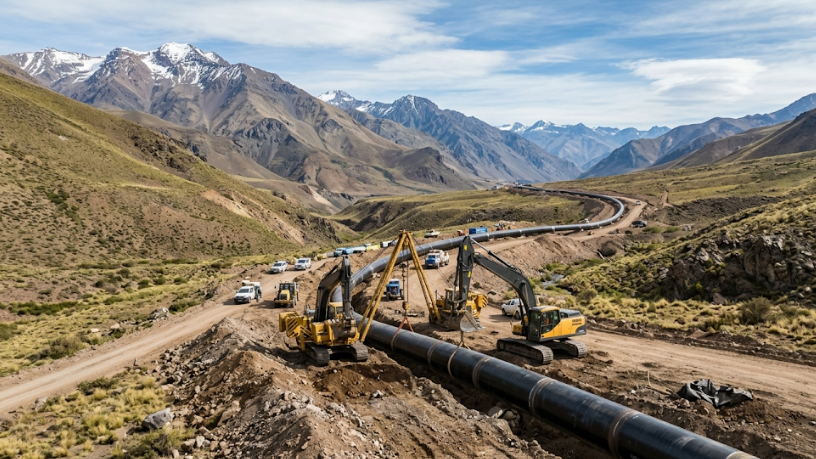
Paulo Roberto Gomes Fernandes emphasizes that this presence helps reposition Brazil in the infrastructure segment. Rather than being remembered only for local execution, Brazilian engineering becomes associated with solutions capable of addressing complex international contexts. This expands the country’s role in discussions about pipelines, energy logistics, and specialized infrastructure projects.
Internationalization requires adaptation and strategy
Gaining ground abroad depends not only on technology but also on the ability to adapt to each market’s requirements, local regulations, regulatory environments, and contracting models. In pipeline projects, international expansion must combine technical expertise with institutional strategy and a careful understanding of the context in which the solution will be applied.
Paulo Roberto Gomes Fernandes notes that this process becomes more solid when engineering integrates practical innovation, field experience, and a clear positioning regarding opportunities. It is not enough to be present at events or in market discussions. It is necessary to demonstrate that Brazilian solutions can be integrated into projects with safety, efficiency, and alignment with local conditions.
Brazilian engineering expands its presence by combining experience and innovation
The growing presence of Brazil in international pipeline projects shows that national engineering can take on a more significant role in highly complex developments. When practical experience, applied technology, and strategic adaptation move together, the country becomes more competitive in demanding markets with stronger foundations.
Paulo Roberto Gomes Fernandes highlights that this progress represents not only a commercial opportunity but also technical recognition. In a sector that values precision, safety, and the ability to respond to challenging scenarios, international projects help consolidate the image of Brazilian engineering as a reliable partner for complex pipeline developments.
Author: Diego Rodríguez Velázquez