


Physician Haeckel Cabral Moraes emphasizes that gynecomastia is a condition characterized by the benign enlargement of breast tissue in men, significantly affecting the patient’s self-esteem and social life. This growth may result from hormonal imbalances, the use of certain medications, or a genetic predisposition that impacts the gland. Read the full text and discover how surgery can solve this discomfort in a definitive and safe way.
What causes gynecomastia and how can the problem be identified?
The primary cause of gynecomastia is hormonal, but several external factors can accelerate or worsen the patient’s clinical condition. According to physician Haeckel Cabral Moraes, the use of anabolic steroids, excessive alcohol consumption, and certain medications for the heart or nervous system are among the main culprits.
Identifying the condition involves noticing firmness or sensitivity in the area behind the areola, which may be accompanied by a visible increase in breast volume. Unlike ordinary fat, glandular tissue has a firmer consistency to the touch, which usually motivates patients to seek specialized evaluation. In adolescents, gynecomastia is often temporary and may regress spontaneously after hormone levels stabilize during the post-pubertal phase.
How is gynecomastia surgery performed in practice?
The surgical procedure to treat male breast enlargement is planned according to the type of tissue predominantly present in the patient’s chest area. As highlighted by physician Haeckel Cabral Moraes, in cases involving only excess localized fat, liposuction alone may be sufficient to provide a flatter and more athletic chest contour.
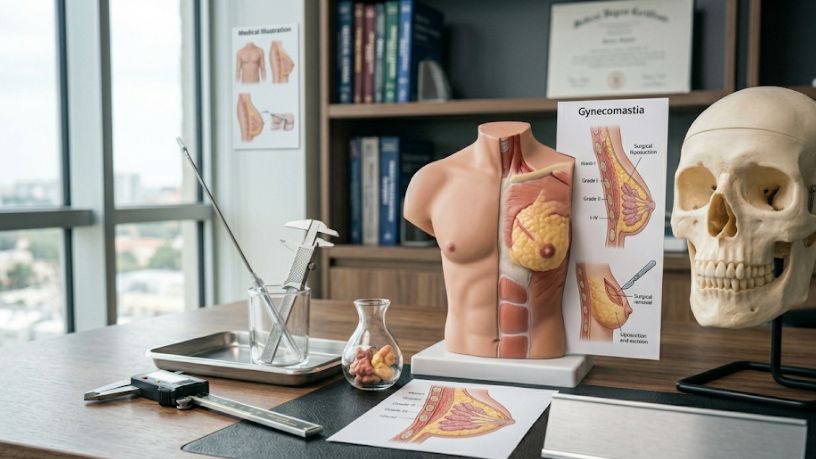
However, when there is actual growth of the mammary gland, it becomes necessary to perform a small periareolar incision to physically remove the dense and hardened tissue. This combined approach ensures that the skin retracts evenly, preventing irregularities or excess tissue that could compromise the aesthetic outcome. The procedure is generally performed under local anesthesia with sedation or general anesthesia, depending on the extent of tissue removal and the patient’s profile.
Recovery and essential postoperative care
The postoperative period following surgical correction of the chest area requires the patient’s full commitment so that the skin and tissues can properly adapt to the new contour of the male chest. According to physician Haeckel Cabral Moraes, the continuous use of compression garments is essential during the first weeks to reduce swelling, control edema, and prevent complications such as seromas. Follow-up consultations allow the surgeon to assess the healing process and provide guidance on the safe and gradual return to physical activities. During this initial phase, patience and respect for recovery time are essential to ensure stability and high-quality aesthetic results.
For healing to occur without complications and for the chest to achieve the expected definition, the patient must follow specific care instructions at home. Among the main recommendations are avoiding direct sun exposure on the scars, limiting excessive arm movements, undergoing lymphatic drainage when indicated, and temporarily suspending intense physical exercise, especially activities that require strain on the chest muscles.
Gynecomastia and men’s health
Gynecomastia correction is a transformative procedure that restores a man’s freedom to wear comfortable clothing and attend public places without embarrassment. As reinforced by physician Haeckel Cabral Moraes, the surgery does not only address the physical aspect but also promotes a profound restoration of mental health and personal confidence.
By choosing a modern technique and an experienced professional, the patient ensures that the transition to a more harmonious chest occurs with complete safety and naturalness. Regaining self-confidence is the most valuable benefit achieved after the definitive solution to this aesthetic issue that affects so many men at different stages of life.
Author: Diego Rodríguez Velázquez