

The United States has finalized an award of up to $375 million to GlobalFoundries to support the development of a domestic manufacturing facility for quantum technologies. Announced on September 8, 2026, the agreement was made through the CHIPS and Science Act and is intended to strengthen the industrial base needed to produce components for different quantum computing architectures.
The announcement was made by the National Institute of Standards and Technology, an agency of the U.S. Department of Commerce. Rather than funding the immediate delivery of finished quantum computers, the award focuses on manufacturing infrastructure, research and processes that can help move quantum hardware from laboratory development toward more reliable production.
What the GlobalFoundries award will support
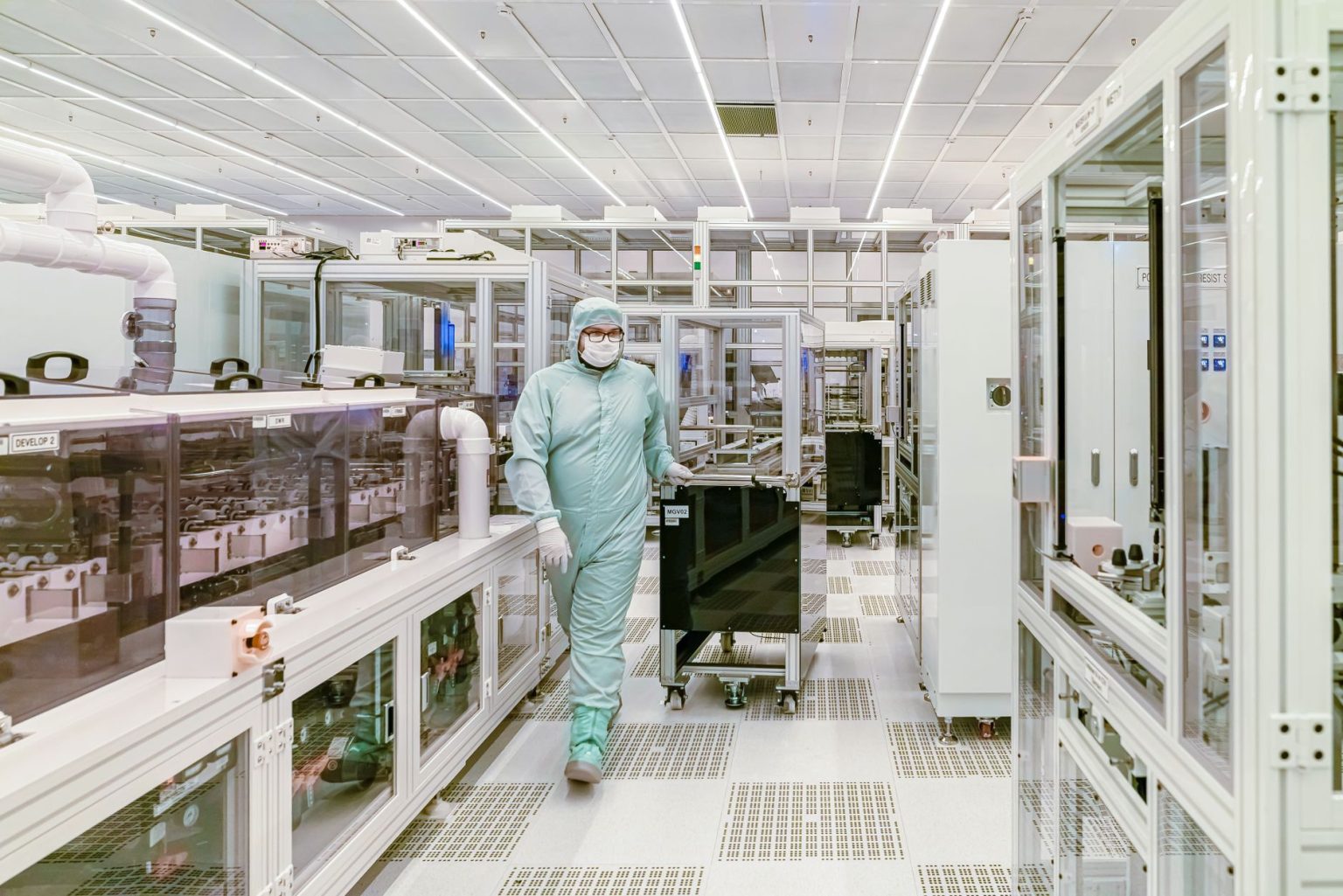
The funding will help establish what the federal government describes as a domestic quantum foundry. The facility is expected to support multiple approaches to quantum computing, creating manufacturing capacity that can serve different types of hardware instead of being limited to a single technology platform.
The program also includes research into cryogenic CMOS process design kits, advanced packaging and heterogeneous integration. These areas address important challenges in quantum hardware, where components may need to operate at extremely low temperatures and where different materials, layers and electronic systems must work together with high precision.
Cryogenic CMOS technologies are particularly relevant because quantum systems depend on specialized control and readout electronics operating close to the qubits. Advanced packaging and heterogeneous integration, meanwhile, can help connect components built with different materials or manufacturing processes. Together, these capabilities form part of the production foundation required for more complex quantum machines.
Why the investment matters for U.S. quantum manufacturing
The agreement places quantum computing within the broader U.S. strategy to expand domestic semiconductor capabilities. The federal government has increasingly linked semiconductor policy to emerging technologies, including advanced materials, specialized manufacturing and systems considered important to long-term economic and national security interests.
In May 2026, the Department of Commerce announced letters of intent involving GlobalFoundries, IBM and other companies as part of a potential investment of up to $2 billion to accelerate quantum computing in the United States. According to the NIST announcement, GlobalFoundries was associated with plans for a secure quantum foundry capable of supporting superconducting, photonic and silicon-spin platforms.
The final award represents a step beyond an initial expression of interest. It provides a framework for directing federal support toward facilities and research intended to address one of the sector’s central obstacles: the ability to manufacture advanced quantum components consistently and at greater scale.
What the announcement does not mean
The investment does not mean that commercial quantum computers will become immediately available as a result of the agreement. Quantum computing remains a developing field, and progress depends on several technical challenges, including qubit stability, error correction, manufacturing precision and the cost of operating the systems.
Instead, the GlobalFoundries project is focused on building the industrial and technological base that can support future development. A domestic foundry could give researchers and companies access to specialized fabrication, testing and integration capabilities within the United States, although the award itself does not establish a timetable for commercial quantum products.
This distinction is important because quantum computing requires more than the creation of a working qubit. Useful systems also depend on control electronics, packaging, materials, cooling and manufacturing processes that can operate together. The technologies named in the award address several of those supporting layers.
A broader federal push for quantum technology
The GlobalFoundries agreement is part of a wider series of announcements involving quantum companies and semiconductor research under the CHIPS and Science Act. The NIST CHIPS news releases page lists related federal actions involving companies such as Rigetti, D-Wave, Quantinuum and PsiQuantum.
For the United States, the objective is not only to advance scientific research but also to develop the manufacturing capabilities that support an emerging technology sector. In the long term, quantum computing could affect fields such as artificial intelligence, defense, energy, logistics, health and scientific research. The potential impact, however, depends on whether the industry can overcome current engineering and production barriers.
By directing up to $375 million toward GlobalFoundries, the Department of Commerce is supporting a domestic supply chain for quantum hardware at a stage when fabrication and integration remain major constraints. The announcement therefore reflects an industrial policy decision as much as a research investment: building the infrastructure needed for the next generation of computing in the United States.