
Massive spending on artificial intelligence infrastructure is driving economic growth, but it is also raising new questions about jobs, energy, inflation, and digital competitiveness.
Artificial intelligence has become one of the biggest economic stories in the United States—not simply because of new AI products, but because of the unprecedented investment flowing into the technology. During the past week, new economic data and corporate earnings reinforced a trend that has been building for months: AI infrastructure spending is helping sustain U.S. economic growth even as businesses face higher costs, supply constraints, and growing competition around the world. For consumers, workers, and business leaders, this raises an important question: why does AI investment matter outside the technology sector?
The answer extends far beyond Silicon Valley. AI is influencing hiring decisions, electricity demand, manufacturing, cloud computing, education, healthcare, and even inflation. Companies continue investing billions of dollars in data centers, advanced chips, and AI-powered software because they expect these technologies to improve productivity and create long-term competitive advantages. At the same time, policymakers, economists, and industry analysts are closely monitoring whether these investments will generate lasting economic benefits or introduce new risks. Understanding these developments helps explain why AI has become one of the defining forces shaping the U.S. economy in 2026.
Why are AI investments becoming such an important driver of the U.S. economy?
Recent economic reports suggest that artificial intelligence spending has become one of the strongest contributors to business investment in the United States. Economists expect second-quarter GDP growth to remain relatively steady despite geopolitical uncertainty, with large corporate investments in AI infrastructure helping offset weakness in other sectors of the economy. Spending on advanced computing equipment, cloud infrastructure, and AI-capable data centers has remained resilient even as traditional business investment has slowed.
Major technology companies continue to support this trend. Microsoft recently signaled that it remains committed to large-scale AI infrastructure investments while improving efficiency in its data center strategy. Meta has also expanded its AI ambitions, investing heavily in personal AI assistants and computing capacity that could support future consumer and enterprise products. These announcements illustrate how competition among major technology firms increasingly revolves around computing power rather than simply releasing new software features.
The effects ripple across multiple industries. Semiconductor manufacturers benefit from rising demand for AI processors, construction firms help build new data centers, utilities expand electrical infrastructure, and software developers create AI-powered business tools. This broad investment cycle explains why AI has become an important contributor to overall economic activity rather than remaining confined to the technology industry.
How could the AI boom affect everyday Americans?
Although billion-dollar investments may seem distant from everyday life, their effects are already becoming visible. Businesses across industries are adopting AI tools to automate repetitive tasks, improve customer service, analyze large datasets, and increase employee productivity. For workers, this means many jobs are likely to evolve rather than disappear entirely, with employers placing greater value on digital skills, data literacy, and the ability to work alongside AI systems.
Consumers may also experience both benefits and challenges. AI-powered services are making online search, digital assistants, healthcare applications, financial tools, and productivity software more capable. At the same time, economists warn that the enormous demand for AI hardware and data centers could contribute to higher prices for specialized computer components, electricity, and some technology services if supply struggles to keep pace with demand.
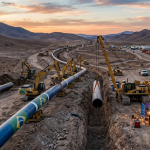
Another consideration is infrastructure. AI data centers require significant electrical capacity, cooling systems, and networking equipment. As more facilities are built across the country, utilities and local governments will need to expand energy infrastructure while balancing environmental goals. This growing demand has sparked broader discussions about electricity generation, sustainability, and long-term planning for America’s digital economy.
What should businesses, workers, and policymakers watch next?
The next phase of AI development will likely focus less on announcing new models and more on scaling the infrastructure needed to support them. Companies are increasingly competing through access to computing resources, custom AI chips, cloud platforms, and enterprise software ecosystems. That competition is expected to intensify as international rivals, including the European Union, dramatically increase investments aimed at reducing dependence on U.S. AI infrastructure and strengthening domestic technology capabilities.
For American businesses, the opportunity lies in improving productivity while adapting responsibly to rapid technological change. Organizations that invest in workforce training, cybersecurity, responsible AI governance, and digital transformation may be better positioned to benefit from the next generation of AI tools. Meanwhile, workers who continue developing technical and analytical skills are likely to remain competitive as job requirements evolve.
Over the coming months, attention will remain focused on whether AI investment continues supporting economic growth without creating excessive inflationary pressure or infrastructure bottlenecks. Policymakers will also monitor energy demand, supply chain resilience, and international competition as AI becomes an increasingly strategic national asset. Rather than representing a short-lived technology trend, the current investment cycle suggests that artificial intelligence is becoming foundational infrastructure for the modern economy. How successfully the United States balances innovation, affordability, workforce development, and regulation may determine not only the future of its technology sector but also the broader direction of economic growth for years to come.
Sources:
https://www.reuters.com/business/consumers-ai-spending-likely-supported-us-economic-growth-second-quarter-2026-07-30/
https://www.reuters.com/commentary/breakingviews/big-tech-multiples-stuck-ai-value-chain-clog-2026-07-29/
https://apnews.com/article/88b83cd517a4d47c115605e636d0b3e4
https://www.reuters.com/world/us/google-increases-capex-forecast-again-after-cloud-driven-quarterly-beat-2026-07-22/U
https://www.un.org/independent-international-scientific-panel-ai/sites/default/files/2026-07/en_Preliminary%20Report_.pdf