

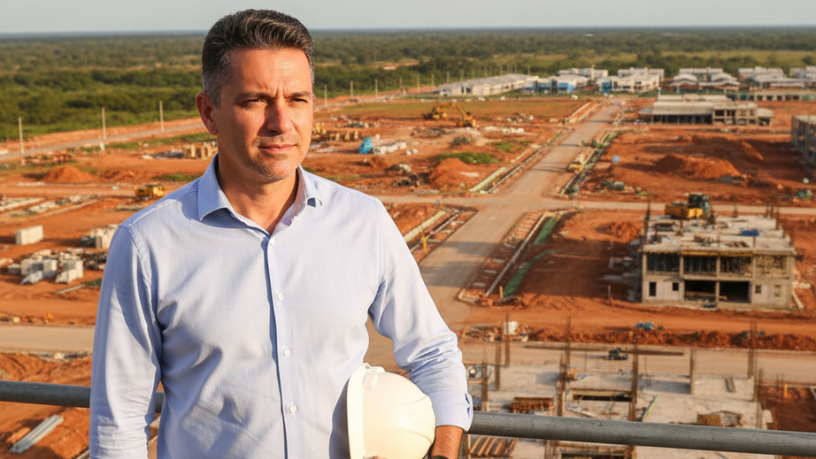
Real estate developer Guilherme Silva Ribeiro Campos assesses that civil construction has played a central role in strengthening the economy in expanding regions, especially in states where urban growth is still consolidating. The sector not only drives the development of cities but also activates essential production chains within the regional economy.
In Roraima, where new urban projects are gaining ground, this influence becomes even more evident. In this context, understanding civil construction as an economic driver makes it possible to analyze how different activities connect to foster regional growth.
Throughout this text, we will explore how job creation, productive integration, and urban planning contribute to strengthening development in Roraima.
Civil construction and direct job creation
Initially, it is important to recognize that civil construction has a strong capacity to generate direct employment. Guilherme Silva Ribeiro Campos explains that each new development mobilizes a wide range of professionals, from technical teams to operational workers. This movement helps stimulate the local labor market.
In addition, the continuity of construction projects helps sustain job creation over time. Structured projects create opportunities at different stages, which expands the sector’s social impact. This strengthens the regional economy. Another relevant aspect involves professional qualification. The advancement of civil construction encourages the development of new skills and specializations.
Indirect impacts on the regional economy
The role of civil construction goes beyond direct employment, influencing a wide range of related economic activities. Entire production chains are activated through construction projects. According to Guilherme Silva Ribeiro Campos, the sector stimulates areas such as building materials trade, transportation, technical services, and logistics.
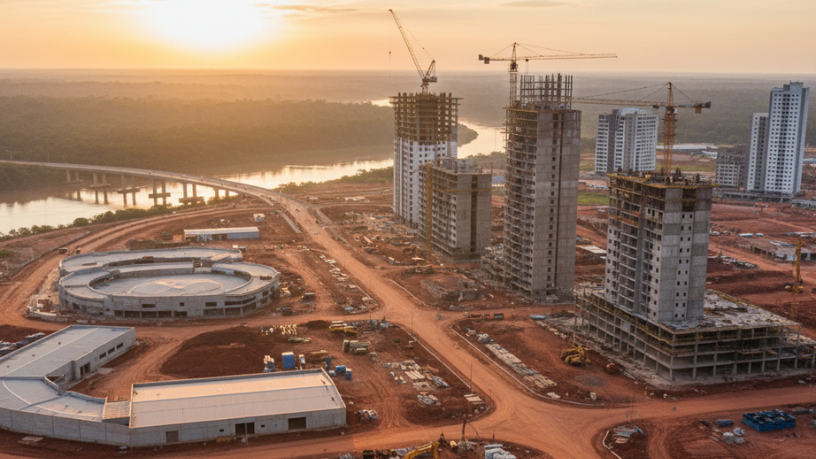
This multiplier effect expands the economic reach of the projects carried out. The impact extends across different segments. At the same time, the economic activity generated by construction benefits small and medium-sized local businesses, contributing to a broader strengthening of the economy.
Urban planning and organized growth
Civil construction also plays an important role in organizing urban growth. Structured projects help define how cities expand and develop. As a real estate and agribusiness entrepreneur, Guilherme Silva Ribeiro Campos emphasizes that planned developments contribute to structuring neighborhoods and improving urban infrastructure.
When construction is carried out strategically, its impact becomes more consistent. In addition, urban planning associated with civil construction helps prevent issues related to disorganized expansion. Cities that grow in an organized manner tend to achieve better long-term results.
Integration with other productive sectors
The construction sector is directly connected to other areas of the economy, amplifying its impact on regional development. This integration strengthens economic growth. According to Guilherme Silva Ribeiro Campos, the articulation between civil construction, the real estate market, and agribusiness contributes to creating a more dynamic economic environment.
Projects that interact with different sectors tend to generate broader results. Another important point involves economic diversification. Regions with multiple productive activities tend to show greater stability, reinforcing sustainable growth.
Civil construction as a foundation for economic development
Civil construction in Roraima demonstrates how the sector can act as one of the main engines of regional economic growth. Its ability to generate jobs, activate production chains, and structure territory highlights its strategic importance.
Therefore, the combination of planning, business management, and productive integration becomes essential to consolidate this process. In this way, civil construction plays a fundamental role in building more balanced and sustainable development.
To follow content on regional development, the real estate market, and growth strategies, follow the developer’s profile on Instagram: @guicamposvlg
Author: Diego Rodríguez Velázquez