

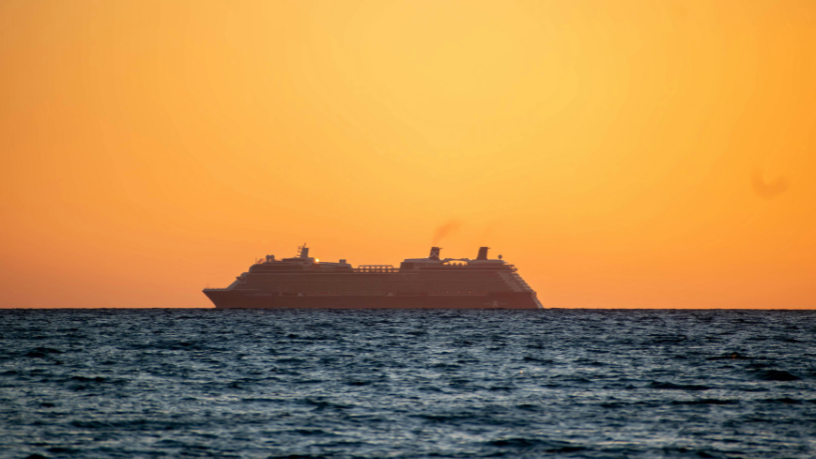
The recent appearance of U.S. naval vessels heading toward the Venezuelan coast has triggered regional alarms and brought long-standing geopolitical questions to the forefront. This U.S. naval deployment near Venezuelan coast combines maritime presence, strategic logistics and international visibility. With satellite imagery and reports highlighting the movement, it becomes clear that this naval deployment near Venezuelan coast is more than a routine patrol. The deployment suggests a combination of deterrence, positioning and message-sending that resonates across borders. In an era of complex maritime dynamics, every ship set in motion feeds into broader narratives of power and influence. With this in mind the U.S. naval deployment near Venezuelan coast becomes not just an event but a strategic statement.
To properly assess the significance of the U.S. naval deployment near Venezuelan coast one must consider the historical ties between the United States and Venezuela, maritime security expectations and regional shipping routes. The naval component becomes an instrument of strategic depth where the movement of vessels may signal everything from logistical exercises to explicit political pressure. When discussing the U.S. naval deployment near Venezuelan coast the implications for coastal states and neighbors in terms of security, alliances and freedom of action become quite direct. Moreover the media factor amplifies the impact as imagery and reporting spark diplomatic reaction, reinforce narratives of containment or influence expansion and shape leadership perceptions. As such the U.S. naval deployment near Venezuelan coast demands multi-level analysis.
The operational side of the U.S. naval deployment near Venezuelan coast also warrants attention. The vessels involved may be configured for missions such as surveillance, logistics support, air coordination or deployment of special forces. Such mobilization requires supply chains, secure routes and potentially authorization for sensitive zones. The presence of naval assets near Venezuela raises questions about whether the goal is to interdict maritime smuggling routes, monitor vessel traffic or simply position a visible deterrent. When the U.S. naval deployment near Venezuelan coast becomes visible through satellites or public reporting the line between operational transparency and strategic signalling blurs. In this context the combination of visibility and physical presence becomes a factor of influence.
On the international stage the U.S. naval deployment near Venezuelan coast heightens power dynamics and alliance patterns. Regional countries closely watch whether these maneuvers are confined to security or deeper intentions of intervention or naval rebalancing are at play. The U.S. naval presence near Venezuela demands attention from coastal states, international organizations and governments seeking to defend autonomy and maritime sovereignty. The U.S. naval deployment near Venezuelan coast thus morphs into not just a naval fact but a symbol of power, surveillance and strategic interest in a highly interdependent maritime and political environment. This kind of action underlines that maritime zones adjacent to states in crisis serve as grounds for external influence beyond local priorities.
For the target country and coastal communities the U.S. naval deployment near Venezuelan coast brings uncertainty and adaptation. Residents near the shoreline observe unfamiliar vessels, potential movements of troops or equipment and adjust their routines under novel conditions. Local authorities must calibrate diplomatic, military and humanitarian responses. In some cases the U.S. naval deployment near Venezuelan coast may provoke tensions with native patrols, demand enhanced surveillance or indirectly shift maritime traffic patterns. The visibility of such a deployment highlights the need for transparency, multilateral dialogue and readiness for unintended consequences.
On the other hand the announcement or recognition of the U.S. naval deployment near Venezuelan coast also opens windows for cooperation and negotiation. If the involved parties choose open communication this movement can act as a catalyst for agreements on maritime security, illicit trafficking control and environmental protection efforts. Neighboring states and regional bodies can seize the moment to build dialogue channels, monitor vessel traffic or even coordinate joint patrols. Consequently the U.S. naval deployment near Venezuelan coast may be seen not just as a show of might but as an invitation to collective management if political will is present.
Media coverage of the U.S. naval deployment near Venezuelan coast plays a crucial role. News outlets and digital platforms broadcast images, speculations and analyses that influence public perception and official reaction. Simultaneously the strategic objective of the naval presence may be precisely to generate this kind of attention, magnifying its message of capability and reach. Communications shape how an event is understood — as looming crisis, benign monitoring or prelude to action. The U.S. naval deployment near Venezuelan coast stands as a case study in how military presence and public narrative intertwine.
In summary the U.S. naval deployment near Venezuelan coast is more than naval movement: it is a narrative of power, surveillance, cooperation and regional impact. Physical presence is combined with global visibility and local expectations, creating a stage where each maneuver matters. The balance between demonstration of strength and opportunity for mutual understanding will dictate whether this deployment leads to escalation or alignment. Within this framework the U.S. naval deployment near Venezuelan coast invites reflection on how sea routes, ships and satellites have become instruments of political and diplomatic strategy in the twenty first century.
Autor: Halabeth Gallavan